Showing posts with label depression. Show all posts

Wednesday, May 30, 2018

Book about Depression


More than 350 million people of all ages in the world suffer from depressions. About 5% of children suffer from depression. Those who experience loss, have learning or conduct issues, and those with anxiety are at higher risk. 

Meh is wordless picture book about depression that gives a lot of freedom to readers to reflect, project, and interpret how they best see and understand the story. Especially poignant is how the cat is open to interpretation as to what may be helping the boy get out of his depression — and creates an important opportunity for a person to imagine what help would look like for them.  Meh also includes questions that can guide the reader through the story.

This book is applicable to many levels of grief, sadness, and depression for both those suffering directly or indirectly from it.   This book gives strength, hope, empathy, and understanding in a very approachable graphic-novel/picture book format. The publisher thunderstoneMeh_Activity-book offers a free booklet of activities to be used in conjunction with this book to help ease feelings of worry and sadness. I include a copy of this book in the Family Resource Pack I loan families who ask for my help with a child who has been diagnosed as depressed or has a close family member with depression.

Saturday, January 20, 2018

Book to explain depression to children

Celeste thinks she is the happiest dog in the world. But when she notices something different about her human, Rupert, she wonders if things will ever be the same again. This is a great resource for elementary counselors to help explain depression of a loved one to young children. I have had parents suffer from such serious depression they have had to go to residential treatment for over 3 months. I wish I had had this to help the children begin to understand what their parents were experiencing.

Monday, March 20, 2017

Anxiety and Depression: Consulting with Teachers


Our district is requiring all staff to go to mental health first aid training to help prepare them to deal with mental illness. Since the most common mental illnesses in elementary school are anxiety and depression, this is a resource I have available for my teachers. In Anxiety and Depression in the Classroom: A Teacher’s Guide to Fostering Self-Regulation in Young Students, Nadja Reilly explains the impact of anxiety and depression and other mental health issues in children. She provides suggestions to build resilience and teach self-regulation in order to help kids to succeed in school and beyond.

Self-regulation, fun, and play activities are natural ways to relieve stress and worry and recharge energy. Reilly discusses how to teach students deep-breathing exercises and various ways to understand their bodies. The book provides detailed instructions for educators who teach children in grades K-5. Reilly lists materials needed, gives step-by-step instructions, and offers variations to accommodate specific needs.

As Reilly explains, the teacher can encourage students to come up with funny or silly names for these sensations to make them less threatening. The class comes together to come up with ideas for decreasing these body sensations, such as deep breathing. The book also provides a chapter on communicating with parents to promote teacher-parent collaboration and assist families with kids who are struggling. For use both in the classroom and with parents of school-aged children, this is a book school counselors may want to purchase and loan out to teachers.


Sunday, March 19, 2017

Books about Depression for Kids

Like most school counselors I like to have a variety of books to share with students related to a specific concern or a strategy or skill to manage an issue or symptom.  Seeing characters in books going through something similar to the child normalizes it. Most children understand that is they write a book about it, then it must be pretty common. Here are some of the books on my bookshelf I use with students who feel depressed.
Bowden    I Just Want to be Me
Cook        Blueloon
Crist         What to Do When You Are Cranky and Blue (Grades 4-5)
Foley        Danny and the Blue Cloud
Jones        The Princess and the Fog
Malcolm   Meh: A Story About Depression
McIntyre   How Frederick Found His Light
McKee      Elmer and the Rainbow
Miles         Move Your Mood
Mundy       Sad Isn't Bad


Saturday, March 18, 2017

Depressed Students


This year I have noticed that more of our students are depressed and we have already done more suicide risk assessments in mid March than we did each of the past 3 years. Some of these are students who were referred for services in the past for anxiety.  About half of people diagnosed with depression are also diagnosed with an anxiety disorder www.adaa.org Children with depression may display these symptoms:
Depressed, angry, or irritable mood
Difficulty sleeping or concentrating
Change in grades, getting into trouble at school, or refusing to go to school
Change in eating habits
Physical/somatic complaints
Mood swings
Feeling worthless or restless
Frequent sadness or crying
Withdrawing from friends and activities
Loss of energy
Low self-esteem
Thoughts of death or suicide
When symptoms last for a short period of time, it may be a passing case of “the blues.” But if they last for more than two weeks and interfere with regular daily activities and family and school life, a child may have a depressive disorder. This site is a good resource for parents www.dbsalliance.org

Teachers often overlook children with depression because it has internalizing symptoms not disruptive behavior with externalizing disorders, such as ADHD. Depressed children often don't ask for help at school because of negative thinking patterns: No one cares about my feelings, nothing can be done to help me, and so on (Cash, 2003). Younger students often lack the necessary language skills and self-awareness to report their depressed feelings. Even preschool age children can be depressed. Some students with depression will qualify for a 504 Plan and some may require an IEP.

School counselors can develop a positive relationship, provide emotional support, and teach students who are depressed coping skills.My go to goals for students with mood issues are: good sleep hygiene, healthy eating habits, and plenty of exercise (especially outdoors). There are not many resources for elementary counselors but these may be of some assistance schoolcounselor.org/students-with-depressiocounselingyouthwithdepression

If a student has moderate to severe depression they should be referred out for cognitive behavior therapy and evaluation to see if medication is warranted.

Sunday, October 23, 2016

Helping Children Understand Depression


Depression is a type of mood disorder. The main sign is when children are sad, discouraged, or irritable for weeks or even months. Another sign a child might have depression is negative thinking. This includes focusing on problems and faults, being mostly critical and self-critical, and complaining a lot. To learn more see http://www.webmd.com/depression/
A great resource to explain depression and the need for counseling to children suffering from depression is "How Frederick Found His Light!" by Katherine McIntyre available at https://youthlight.com It could also be used to explain the depression of a family member to students in Kindergarten through grade 3.

Wednesday, May 27, 2015

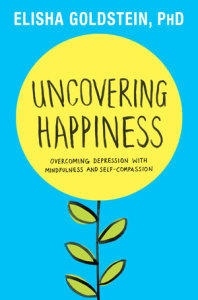
Uncovering Happiness

Uncovering Happiness: Overcoming Depression with Mindfulness and Self-Compassion
In seven simple steps, Uncovering Happiness uses cutting-edge mindfulness and self-
compassion techniques along with innovations in neuroscience to release natural antidepressants in the brain. Dr. Goldstein shows people how to take back control of the mind, mood, and life. One of my take aways from the book was a one minute mindfulness exercise: Just BE. BE stands for Breathe and Expand. Just take a minute to take a few deep breaths and expand attention throughout the body feeling it as it is in the moment.  Dr. Goldstein recommends posting signs in the environment that say "Just BE" as a reminder to practice.  This is the sign hanging in my counseling office.  I try to take a minute between sessions as a self-care strategy to avoid compassion fatigue. Another neat idea in the book is to take self-compassion breaks to allow understanding and self-love to build acceptance.  The trigger suggested for this is simply putting your hand on your heart.  I highly recommend this book for all counselors.


Saturday, February 28, 2015

How to Help Students Change Negative Thinking

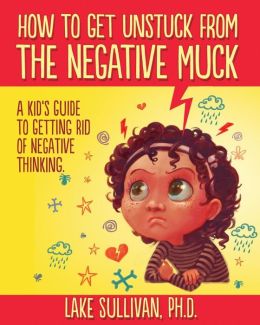
How To Get Unstuck From The Negative Muck: A Kid's Guide To Getting Rid Of Negative Thinking
Sullivan's child-friendly guide to learning ways to cope with negative thinking offers some useful ideas for counselors. It explains that self-talk can be positive, neutral, or negative. If you have a client who is stuck in the negative muck - having a lot of negative thoughts about self, future, and even the world - this is a good resource.  The book suggests having the student choose 3 positive statements, write them on separate sheets of paper, and decorate. For more ideas, check out the book.

Wednesday, April 23, 2014

I Can Believe in Myself

Author Interview: I CAN Believe in Myself - Win copies of the book 
Miriam Laundry's story is perfect to use in counseling to teach children the power of their thoughts. She hopes to proactively promote positive thinking as a way to prevent depression.  It also works well with students who tend to be anxious. It normalizes that everyone has challenges. You might want to check out the author's webpage laundrybooks.com .