Showing posts with label mental health. Show all posts

Wednesday, August 21, 2019

Suicide Prevention/Awareness


Tragically two of my closest friends have lost a child to suicide in the past 5 months. It is hard, even as a trained mental health provider, to know how to help parents who loose a child to suicide.
As school counselors we need to be pro active in bringing awareness to this national health crisis - suicide is the second leading cause of death for young people between the ages of 10 to 35. The number of attempts in students ages 10 to 14 has increased dramatically over the last few years. School counselors must teach others how to prevent suicide and destigmatize death by suicide. For more resources check out Suicide Awareness Voices of Education www.save.org
Suicide is often a poor solution for a life problem. Teaching problem-solving skills, the capacity to manage feelings, and the ability to turn to trusted adults are critical prevention skills. Maintaining a safe school environment where students and staff feel connected is critical to preventing suicide.  Any suspicion of potential suicide places school counselors in a position to immediately assess the student and notify parents/guardians.
School counselors are the first responders to students' mental health needs. School counselors must be informed about signs of suicidal thoughts, knowledgeable about resources, prepare other staff to recognize and report warning signs, assess the risk, and refer students who are high risk to appropriate community agencies. Remember that research shows that people who are having thoughts of suicide feel relief when someone asks after them in a caring way.
Should these preventative practices fail school counselors are key to supportive services.  Suicide can affect the entire school community, there is a ripple effect. Survivors have complex feelings after death by suicide, such as shame, fear, and anger. It takes time to reconcile to the reality of death by suicide. The book Touched by Suicide by Myers & Fine is a good resource for adults trying to cope with the loss of a love one. Many survivors find support groups helpful but grief is unique. November 23 is International Survivors of Suicide Loss Day.

Wednesday, May 9, 2018

Tomorrow is Children's Mental Health Awareness Day

Counselors please spread the work that 1 in 5 children in our country have a mental health challenge requiring assistance. If 20% of our children have this challenge, it is obvious that we need more elementary counselors. Children can "get better" with early intervention and without it their future can be a life of chronic mental illness. The national PTA has a powerful position statement on this you might want to share with your own PTA Position-Statement-Early-Identification-and-Interventions-for-Children-with-Mental-Health-Needs

Wednesday, May 2, 2018

1 in 5 kids

I was very pleased last night watching the evening news that they were highlighting Mental Health Awareness Month and talking about the fact that 1 in 5 youth in our county have a mental health condition that needs intervention. There are two types of stigma associated with mental illness: social stigma and self-stigma. Hopefully by equating mental and physical illnesses and talking about it with children we can reduce the stigma. This is my bulletin board that I use each May. It always raises lots of questions like, "What is mental illness" "Do kids at our school have mental illnesses?" "Are you sure there are that many young people with mental illness?" For more information on how to support those with mental illness go to nami.org

Monday, April 30, 2018

May Is Mental Health Awareness Month

As counselors we care about mental health. There is so much stigma still attached to mental illness that needs to be addressed. Please take advantage of Mental Health Awareness Month to speak up about mental illness and be proactive in reducing the stigma. Get free resources at mentalhealthamerica Last year I took advantage of the awareness campaign to speak to my PTA about children's mental health. Our school district requires all secondary schools to plan activities about mental health during May. They do some fun wellness carnivals with activities like yoga, bubbles, Fitbit contests, etc. I always display a large bulletin board outside my office about children being affected by mental illness. May 10 is the day of the month that focuses on children samhsa.gov/children/awareness-day

Sunday, September 3, 2017

September is Suicide Prevention Awareness Month

September is National Suicide Prevention Awareness Month—a time to share resources and stories in an effort to shed light on this highly taboo and stigmatized topic. We use this month to reach out to those affected by suicide, raise awareness and connect individuals with suicidal ideation to treatment services. It is also important to ensure that individuals, friends and families have access to the resources they need to discuss suicide prevention. nami/Suicide-Prevention-Awareness-Month

While the number of deaths by suicide in younger children is statistically small, the number of attempts in students ages 10 to 14 has increased dramatically over the last few years, especially for girls. And even if they haven’t made an attempt, there are children in every school who are thinking about suicide sptsusa.org/elementary-school  We need to think about suicide as an attempt to solve a problem of intense emotional pain with impaired skills. As counselors we need to have productive way to have a conversation about suicide with any aged student. Never assume just because a person is young that they will not attempt suicide. If a student is talking about wanting to die to a risk assessment and consult with another mental health provider. ALWAYS notify parents and document the notification even if you don't believe there is an imminent threat. Continue to take threats seriously: Follow through is important even after the child calms down or informs you or the parent "they didn't mean it." Avoid assuming behavior is simply attention seeking (but at the same time avoid reinforcing suicide threats; e.g., by allowing the student who has threatened suicide to avoid or get something to make them feel better).

Suicide is the tenth leading cause of death overall so many children and families are impacted by suicide. Using "suicide death" or" death by suicide" is more helpful than saying "successful suicide" or "committed suicide." Often times family members will not tell the child that it was a suicide death. I don't think this is helpful and further adds to the stigma and shame. People bereaved by suicide often experience complicated bereavement. There can be many other feelings in addition to grief including shock, social isolation, anger and guilt. The often sudden and sometimes unexpected nature of the death can also be extremely traumatic for those who lived with or knew the person. 

There are more resources at save.org/ but these are geared toward older students. Suicide prevention programs are becoming more common in secondary schools because of the increasing number of suicide attempts. I am not aware of any aimed at elementary learners. However, it is important to get information in the hands of staff and parents about the warning signs of suicide and always #BeThe1ToAsk. That is basic mental health first aide.  

Thursday, August 10, 2017

Back to School: Part 1 - Resources for Parents to Help Children with Anxiety

August means the end of summer vacation and the time to start back to school. Children frequently experience a wide range of emotions about the start of a school year including excitement, worry, and sadness. The emotions about a new school year can start showing weeks before the first day of class. Many parents report an increase in meltdowns and anxious talk at bedtime even before the "Meet Your Teacher" Open House.

I always recommend to parents, that if possible, not to travel just before school opens, instead plan to be in town and attend the Open House and get children back on a school schedule (generally earlier bedtimes than were the norm during summer). Also to try to arrange a play date with a classmate once it is known who will be in each class. We can all appreciate that having a familiar face in class helps with Back-to-School jitters. I remind parents that for children the start of the school year can be highly stressful. It is important that parents express optimism about the new school year and not feed into the child's concern about a certain teacher or classmate. Parents can also role-play with their child to prepare them to greet the teacher at Open House, introduce themselves to students they do not know, etc.

Most children will adjust to a new school year within a month. If after the first month of school a child is reluctant to come in the building on their own or expressing regular concern, I encourage parents to talk to the teacher and myself to see if we can help with the adjustment or discuss if a child may be experiencing serious separation anxiety. The main differences between separation anxiety and separation anxiety disorder are the intensity of your child’s fears, and whether these fears keep him or her from normal activities. Children with separation anxiety disorder may become agitated at just the thought of being away from mom or dad, and may complain of sickness to avoid playing with friends or attending school. When symptoms are extreme enough, these anxieties can add up to a disorder that affects approximately 4%-5% of children in the U. S. ages 7 to 11 years. It is less common in teenagers, affecting about 1.3% of American teens. It affects boys and girls equally. If a parent collaborating with the teacher, counselor, and student can't improve a students anxiety a referral may be warranted.

It is very important that parents understand anxiety if they are going to be successful in helping an anxious child. Parents need to work to make an anxious child feel safer not let them avoid the source of anxiety. There are many good books to help parents learn more about anxiety and related concerns. The ones from the past 10 years I recommend are the following:

Helping Your Anxious Child: A Step-by-Step Guide for Parents by R. M. Rapee et al. (2008) provides parents a guide for assisting their children in overcoming a variety of worries, fears, and anxieties.

Growing Up Brave: Expert Strategies for Helping Your Child Overcome Fear, Stress, and Anxiety by Donna Pincus (2012) helps parents identify and understand anxiety in their children, outlines effective and convenient parenting techniques for reducing anxiety, and shows parents how to promote bravery for long-term confidence.

Helping Your Child Overcome Separation Anxiety or School Refusal: A Step-by-Step Guide for Parents by Andrew R. Eisen & Linda Engler (2006) helps parents/guardians: a) identify child’s unique safety needs; b) empower child with simple and effective coping skills; c) guide child to better sleep and regular school attendance; and d) monitor progress.

Overcoming School Anxiety: How to Help Your Child Deal with Separation, Tests, Homework, Bullies, Math Phobia, and Other Worries by Diane Peters Mayer (2008) shows parents how to deal with a wide variety of problems, from test and homework anxiety, to bullying, and fear of speaking up in class. Mayer also offers easy-to-learn techniques for children including breathing and relaxation exercises, focusing techniques, and tips on proper diet and exercise that help relieve stress.

Freeing Your Child from Anxiety, Revised and Updated Edition: Practical Strategies to Overcome Fears, Worries, and Phobias and Be Prepared for Life--from Toddlers to Teens (2014) explains some of the ways they "help" actually makes children more anxious. The book explains how parents and children can work TOGETHER against the anxiety.

Anxious Kids, Anxious Parents by Reid Wilson and Lynn Lyons (2013) offers an effective approach to help children and teens push through their fears, worries, and phobias to ultimately become more resilient, independent, and happy.

Why Smart Kids Worry: And What Parents Can Do to Help by Allison Edwards (2013) guides parents through the mental and emotional process of where a child's fears come from and why they are so hard to move past. Edwards focuses on how to parent a child who is both smart and anxious.

Your Anxious Child: How Parents and Teachers Can Relieve Anxiety in Children 2nd Edition (2016) by John Dacey, Martha D. Mack, Lisa B. Fiore (Author) designed to help parents, teachers, and counselors support young people suffering from anxiety. Offers an array of innovative strategies organized into the authors’ four-step “COPE” program. Each strategy is accompanied by a set of activities contextualized with full details of the appropriate age level, materials needed, suggested setting, and a template script.

There are several good web sites that offer advice to parents regarding anxiety. These have good free resources for parents childanxiety.net and anxietybc.com and worrywisekids.org

Future posts will focus on resources for counselors, teachers, and children to develop a helpful approach to anxiety.

Monday, May 15, 2017

Mental Health Awareness Month


This is the bulletin board display we use each May to bring awareness to the fact that 20% of children have mental health challenges in an effort to destigmatize having a diagnosis and promoting treatment. We just change the background, arrangement and the border to keep it looking fresh. It invites kids to ask what does that mean? to me and gives me (and teachers who are asked) an opportunity to have a conversation about mental health challenges. All our staff are being trained a Mental Health First Aider to make them more knowledgeable and comfortable about dealing with students and people in the community who have mental health challenges. We were required to take the course if it is our year to renew our license which for me was this year. To learn more about the course check out mentalhealthfirstaid The goal is for all people in the community (not just educators and mental health providers) to be as comfortable with mental health first aid as CPR. I spoke at our PTA this month on Mental Health Challenges to make parents more aware and answer questions.

Thursday, May 4, 2017

National Children's Mental Health Day

We need to model talking openly and respectfully about mental health challenges to help end the stigma and encourage those with a mental health disorder to seek treatment. For many mental disorders recovery is possible. As counselors we need to send a message of hope to those who are suffering!

Monday, May 1, 2017

May Is Mental Health Month


As school counselors we need to lead discussions about mental health and work to destigmatize mental illness. There are free kits available mentalhealthamerica I will be speaking to our school's PTA this month on this important topic. Mental health conditions are common among teens and young adults. 1 in 5 people live with a mental health condition—half develop the condition by age 14 and three quarters by age 24. We teach the Breaking the Silence lesson from NAMI in grade 5 btslessonplans

Monday, September 5, 2016

National Suicide Prevention Week

Last fall we had a high school student who died by suicide after experiencing deep emotional pain, hopelessness, and mental illness. Such pain does not make someone a criminal. But the word “commits” makes suicide sound like a crime. My school had two family members who died by suicide last year and I was very careful about the language I used with the family to not further stigmatize their family member. Educate yourself about suicide prevention and advocacy at:
national-suicide-prevention-week

Tuesday, June 2, 2015

Eating Disorders

Eating disorders are serious illnesses that can be life-threatening. Children as young as five or six can have an eating disorder. They are also extremely complex illnesses, arising from a variety of biological, psychological and social factors. A great resource for school counselors is nationaleatingdisorder/EducatorToolkit

Monday, May 4, 2015

May is Mental Health Month

This is the bulletin board hanging outside my offfice this month to highlight mental health awareness. NAMI has lots of good ideas and facts to raise awareness nami.org/Get-Involved/Raise-Awareness Several staff and parents have told me they don't feel comfortable with this board but I say that means it is doing its job to reduce the stigma associated with mental illness. Our state, Virginia, has a big campaign for awareness about mental illness in young people. This site aslos has good resources for school counselors http://1in5kids.org/

Monday, January 19, 2015

Spark Interest


We are required by our district to teach a lesson to all fifth graders to promote awareness and destigmatization of mental illness. We use the lesson plan from NAMI http://www.btslessonplans
However, I adapt the lesson quite a bit to make it fit my school's population.
To motivate the students at the start of the lesson I focus on the importance of the subject.  The statistic for adults is startling, later in the lesson I share that 1 in 5 youth in our state have a mental illness.  I use a variety of techniques to keep students engaged in this lesson which obviously deals with some difficult information.  If you want to motivate students during your lessons I suggest checking out this resource.
100-motivational-techniques-to-take-learning-to-the-next-level/
The lesson really focuses on the stigma aspect and as you may know Rosslyn Carter has worked on that part of the issue for 40 years. For more information on getting beyond the stigma of mental illness check out the pdf at this link  cartercenter.org/health/mental_health/symposium

Tuesday, January 6, 2015

Grief Resources

Healing the Adult Child's Grieving Heart: 100 Practical Ideas After Your Parent Dies
There really are not that many good resources to help families dealing with the death a of a parent.  Most of the books that are out are old.  This is one that I would recommend even though it was published in 2001.

Sunday, March 23, 2014

Nature - The Fountain of Life

Thousands of tired, nerve-shaken, over civilized people are beginning to find out that going to the
mountains is going home; that wildness is a necessity; that mountain parks and reservations are useful not only as fountains of timber and irrigating rivers, but as fountains of life.  John Muir 1901

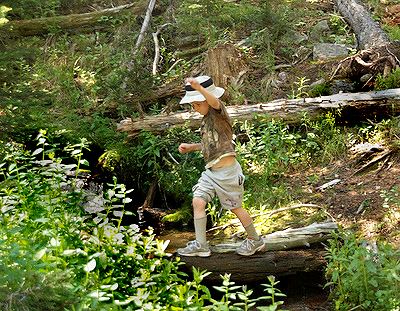
As part of studying mindfulness I have also been reading about the health benefits of nature for children (and adults).  The NationalWildlife Federation has a very informative slide share on the topic.

Spending time in nature can help prevent and alleviate mental health concerns.  Read this interesting study by beyondblue called "Beyond blue to green: The benefits of contact with nature for mental health and well-being".

Wednesday, May 1, 2013

May is Mental Health Month


This is the fabulous bulletin board our school's outstanding volunteer based on some ideas my school psychologist and I gave her.  The purpose is to raise awareness that one in five children have a mental illness (for adults it is one in four persons).  It does not show in the photograph but the one child (above the number one) is popping out.  We wanted the one child representing having a mental illness to look just like the rest of the "kids." We really liked the theme "Open eyes, open hearts."  Our heart is 3D made out of quick drying clay with glitter added.  The background is green because that is the color of the ribbons for mental health matters awareness.  I hope all counselors will do something this month to increase awareness of the importance of mental health!