Showing posts with label mindset. Show all posts

Thursday, May 31, 2018

Classroom Lesson


For those of you who know the YouthLight interactive programs for digital white board and computers, you are probably familiar with the author of this product, Will Moody. I use the program he did "Teaching Self-Regulation" with Brad Chapin in small groups SMART Guidance Program.

I just got the "Mind Your Mindset" 10 lesson curriculum. This is a perfect tier 1 set of lessons that include many key concepts and skills. Mindset can be hard to explain to students but Lesson 1 in this program, An Introduction to Mindset,  does it very clearly.  Lesson 5,  Perfecting Your Goal-Setting Mindset, is an engaging way to teach SMART goals. The lesson opens with an animated sequence and then moves on using clear visuals showing the steps to her goal. I like that the lessons have multiple scenarios and examples because children need repeated practice to acquire the skills they are introduced to in lessons. The lesson I would use if I did not have time to teach them all is seven, The Thoughts We Think, The Words We Say. It uses the analogy of a positive mindset as a big, beautiful balloon and when we say negative thoughts to ourselves, it's like throwing darts at the balloon. The lesson goes on to have a laser blaster that zaps away negative, can't do thoughts.

I am not in the specials rotation, but if I was I would buy all the YouthLight "Smart Guidance" programs. I strongly recommend youthlight/MindYourMindset for any elementary counselor who want to help students see the power of a positive, growth-focused mindset.

Sunday, January 22, 2017

Promoting Optimism


Research has identified three distinct clusters of character strengths: Strengths of Will, Strengths of Heart, and Strengths of Mind. Growth Mindset, Grit, and Optimism are all strengths of will. These strengths are what you might call the “doing” strengths. They help you achieve your goals. Free posters with the character traits are availble free to download at characterlab.org The site also has a Character Growth Card that can be used for teachers and students to assess 8 character strengths. For example:
GRIT
Finished whatever s/he began
Stuck with a project or activity for more than a few weeks
Tried very hard even after experiencing failure
Stayed committed to goals
Kept working hard even when s/he felt like quitting
OPTIMISM
Believed that effort would improve his/her future
When bad things happened, s/he thought about things they could do to
make it better next time
Stayed motivated, even when things didn’t go well
Believed that s/he could improve on things they weren’t good at
This is very similar to the KIPP Character Report Card kippnyc.org/kipp-character/

Our school system uses the MindUp program developed by the Hawn Foundation in Kindergarten through grade 8. The curriculum has a whole unit on "It's All About Attitude" including a lesson on Choosing Optimism and a recommended reading list Mind-Up-Optimism_sm.pdf

Books on Grit and Growth Mindset

Reading children's books can help explain the abstract concepts of grit and growth mindset to young students. I love the book Whistle for Willie (1998) by Keats and have shared it with hundreds of children to teach perseverance. A new book on my shelf Nadia: The Girl Who Couldn't Sit Still (2016) by Gray is a example of how biographies are a great genre to teach these concepts. Another great biography is Salt in His Shoes by Michael Jordan's mom and sister.

There are several good lessons online that use The Most Magnificent Thing to teach goal setting, grit, and/or growth mindset including  MostMagnificentThingTeachingGuide and https://twowritingteachers/spires/ The latter has a very good anchor chart similar to the one I develop when teaching growth mindset in grade 2 and 3.

Here are others I use in grades K-3 in either tier 1 class lessons or tier 2 small groups:
Giraffes Can't Dance by Andreae & Parker-Rees
Flight School by Judge
You Can Do It Bert! by Konnecke
What Do You Do with an Idea? by Yamada
The Dot by Reynolds
Ish by Reynolds
Extra Yarn by Barnett
Making A Splash: A Growth Mindset Children's Book by Reiley
Everyone Can Learn to Ride a Bicycle by Raschka

I typically teach goal setting, grit, and growth mindset together in tier 1 lessons in September. I also cover these important topics in my resiliency tier 2 groups.

Grit: The Key to Your Success


I have used this video as the hook for classroom lesson at the upper grades but it could also be used in small tier 2 groups to encourage grit.

How to teach GRIT


Education has been talking about Grit, motivational drive that keeps you on a difficult task over a sustained period of time, for a dozen years based on Duckworth's research. Duckworth focuses on both stamina of effort and also stamina in passion and interest. She said, “Grit is not just about perseverance over time, but also passion over time.” She believes students need to be taught to focus on tasks in front of them and control their “grass is always greener” thinking. She also believes promoting a growth mindset increases grit. Amy Lyon's shares a great lesson for 5th graders based on an interview to help students understand how grit leads to success edutopia.org/grit-perseverance-walk-video I love to have students interview people to learn and then bring what they discovered and share it in some way with their peers. If you want other ideas to teach grit including book suggestions look at edutopia.org/blog/true-grit


Thursday, December 15, 2016

Build Program on Evidence-based Social Emotional Learning


Programs like Second Step developed by Committee for Children have research to show the proper sequence and have developed tools and lessons to teach pro-social and emotional skills. Other popular concepts like Grit, Growth Mindset, Mindfulness, Resilience, and Self-regulation are all similar to SEL but not all are skill based and the research on how to teach them and how to measure them is still being developed. According to Committee for Children these terms can be defined as:

Grit “Grit” is having the disposition to pursue and achieve long-term goals with passion and perseverance. It is having the self-control for sustained, focused effort to follow through and endure through obstacles and discouragement.

Growth Mindset “Growth mindset” is the idea that intelligence can be developed through effort. It is having belief in one’s individual capabilities and seeing one’s own control over the present and future. It is having confidence that abilities can improve through hard work and seeking challenging learning opportunities, viewing them as moments to learn.

Mindfulness
“Mindfulness” is being aware of one’s own feelings, thoughts, body sensations, and the surrounding environment. It is having a deliberate and conscious focus on the present moment by directing attention to one’s experiences without labeling or judging them in any way.

Resilience “Resilience” is the ability to adapt well to change, recover from setbacks, and keep going in the face of adversity.

Another idea that is getting lots of attention is Self-regulation. “Self-regulation” is the ability to monitor and control our own behavior, emotions, or thoughts, altering them in accordance with the demands of the situation. It includes the abilities to inhibit first responses, to resist interference from irrelevant stimulation, and to persist on relevant tasks even when we don't enjoy them (education.com).

We include all of these concepts in our school counseling program but depend on Second Step as the anchor for the tier 1 and tier 2 components of the program because it is evidence-based. To further teach children about their brains and  develop mindful awareness we use the MindUp Curriculum from the Hawn Foundation because it has been studied in schools. We use MindUp in both tier 1 and 2 but not as extensively as Second Step. We are always looking for evidence-based programs and practices to improve the school counseling program.

Wednesday, December 7, 2016

Mindset Matters

This counseling curriculum guide by Dr. Lisa King is a great resource for elementary and middle school counselors. It can be used in classroom lessons, but I use it with groups in grades 3-5. It is perfect for a small group because you set the stage in session 1 and then select a lesson from the chapter for each of the letters in MINDSET:
Mindfulness
Identify how Your Brain Works
Not Yet is OK
Determination
Self-talk
Everyone is Unique
Teach What You Know to Others
I use it in my resiliency groups. There are several lessons for each letter so I select the one I feel is most appropriate based on my group members. The book also has bibliotherapy lists, websites, and video clip lists for each chapter.It contains student pre-post tests but I modifed it to allign with the type of perception data ASCA wants us to collect (knowledge, skills, and attitudes) and using an even number scale (no neutral as you have with a 3 or 5 point scale).


Friday, December 2, 2016

Perseverance

To go along with lesson on grit is my December bulletin board on Perseverance. This board is an adaption of the one in Rosanne Sheritz Sartori's book Counseling On the Wall. You just down load the quotes from the CD that comes with the book. I used it several years ago and just updated it with a different background, border, and sparkly stars (from Target dollar section). It was super easy and reinforces what I am covering in classes and my resiliency groups.
Check out bulletin boards for every month of the school year on the Bulletin Board page of this website.

Thursday, December 24, 2015

Change Mindset Bulletin Board

This is the bulletin board outside my office put together by my awesome volunteer to remind students how to change their words from a fixed to a growth mindset. It also has a QR Code on the left side that if you have a reader takes you to a great article on growth mindset.

Saturday, November 28, 2015

Understanding Mistakes


When teaching about growth mindset or consulting with staff and families I like to use this image. I hear some people misinterpret or over simplify that mistakes are good. This clearly shows that some types facilitate learning and some do not. Check out the full explanation at
why-understanding-these-four-types-of-mistakes-can-help-us-learn/

Saturday, August 15, 2015

New Book to Teach Growth Mindset

If you are trying to promote a growth mindset at your school you will want to add this book to your shelf as a resource.  It is an engaging story based on the research of growth mindset. It also has information for parents on this important concept. I am planning to use it in a classroom lesson on academic success, probably in first grade depending on what other books I find.

Tuesday, July 14, 2015

#Reach Higher: Grit and Goals


I have decided to redo my fifth grade goal setting lesson on academic success. I am now calling it #Reach Higher: Grit and Goals.  The lesson will address several of the ASCA Mindsets & Behaviors For Student Success. The self-management skills and learning strategies covered include:  
Self-Management Skills: 2. Demonstrate self-discipline and self-control  4. Ability to delay immediate gratification for long-term rewards  5. Demonstrate perseverance to achieve long- and short-term goals
Learning Strategies: 7. Identify long- and short-term academic, career and social/emotional goals
As the hook I am going to have the students complete the 12- item Grit Scale. I will put the scoring part on the PowerPoint. Once they are focused on their own level of grit I will use the PowerPoint to guide a mini lesson tying grit to goals and then have them write a #Reach Higher goal that I will then post as a bulletin board.
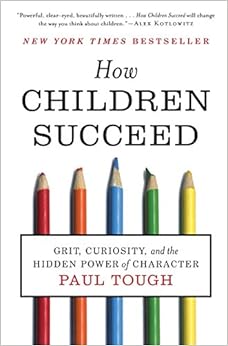
If you want to learn more about "grit" or share this key concept with parents I recommend Paul Tough's book. We used it in the past as our parent/staff book club book.

Grit: The Key to Your Success at FLVS


I am going to show this video in either grade 4 or 5 as an introduction to goal setting.  I follow-up with another lesson in grade 5 that uses the Grit Scale. I hope the short video will inspire the students set challenging goals for their own academic success.

Friday, July 3, 2015

ASCA Mindsets Alignment with Second Step Suite

The Committee for Children has stepped up to help counselors by publishing a crosswalk showing the alignment of Second Step (Early Learning to grade 8) with the ASCA Mindsets. Check it out
asca-alignment-2015-web.pdf

Wednesday, July 1, 2015

Using ASCA Mindsets in Lesson Plans


I am working this summer to update my classroom lesson plans with the new ASCA Mindsets.  I also indicate our State and Local standards for each lesson. I include learning and language objectives for each lesson as well.  Most of my lessons are guided with a PowerPoint or SMART Notebook outline. I always take a book into the class just in case the technology is not working. I have been trained to share the lesson objectives in kid friendly "I can" statements so students are clear in advance what they will be learning and what they will be expected to do.